
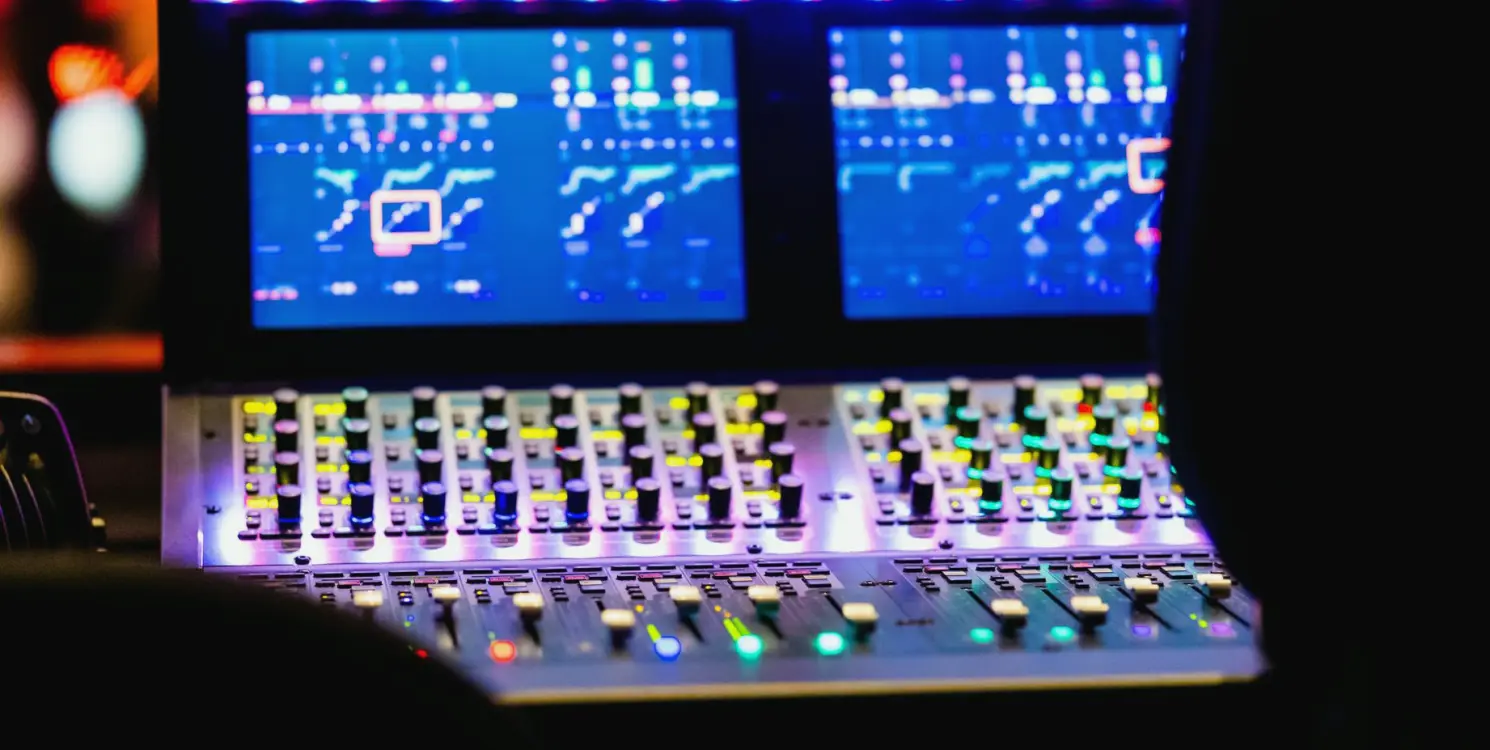
Six Room Mistakes That Spoil Speech on Air, and How to Avoid Them
Most muddy dialogue in a live studio traces back to a handful of avoidable choices made before the first rehearsal. Here is what goes wrong with room acoustics and how to put it right.
Treating the room last, after the kit is bought
The most common mistake is also the most expensive: a studio is specified around cameras, desks and monitors, and the room is considered only when the first test recordings sound hollow. By then the set is built, the lighting is rigged and every wall already has a purpose. Treatment has to fight for space with scenery and cabling, and the result is usually a compromise.
Measure the empty room before anything is fixed in place. A simple sweep with a measurement microphone shows how long sound lingers and where it piles up. That evidence belongs in the very first planning meeting, next to the floor plan, because it decides where hard flats can go and where soft surfaces are needed. I mention this as a lighting designer who has watched good fixtures wait while a room was reworked around them.
- Measure the bare room before set design starts
- Share the results with the people building the set
- Reserve wall and ceiling area for treatment early
Using foam as a cure for every problem
Thin foam tiles on a wall look like acoustic treatment, and they do remove a little brightness. What they leave alone is the low and low-mid energy that makes voices boomy and chesty. A room with foam on every surface can sound dull and still ring, which is the worst of both outcomes for a presenter trying to sound natural.
Match the material to the problem. Dense absorbers of sensible thickness deal with the lower frequencies, while diffusion keeps the room from sounding dead. Priya Sandhu, our acoustics specialist, tends to start with the offending reflections rather than the walls as a whole, and treats those first. Fewer, better-placed panels usually do more than a studio covered edge to edge, and they leave room for the set designer to work.
- Choose thickness for the frequencies you actually need to control
- Treat the strongest reflections before covering whole walls
Placing microphones where they are convenient
A microphone is often positioned wherever it stays out of shot, and that decision shapes the sound as much as any panel. A boom held too high picks up the room more than the speaker. A lavalier clipped against a jacket or hidden under a scarf rubs and darkens the voice. A desk microphone beside a hard tabletop catches a reflection that thickens every word.
Agree distances and positions with the director and the lighting plan together, since shadows from a boom and shots without it pull in opposite directions. A consistent distance gives consistent level, which saves the sound operator from chasing faders during live speech. Mark positions on the floor and the desk during rehearsal, and note them in the run sheet so that the next crew places them identically.
Guests rarely behave like presenters: they lean, turn to look at each other and fidget. Choose pickup patterns and placements that forgive movement, and test them with a real guest, not a technician sitting still.
- Fix boom and desk positions during rehearsal
- Record the distances in the run sheet
Ignoring noise that the cameras cannot see
Rooms carry sound the eye never notices: the hum of a ventilation unit, a fridge in the corridor, fixtures that buzz when dimmed, a door that closes with a thud. In a quiet rehearsal these seem harmless. On air, behind a calm interview, they sit under every sentence and are impossible to remove afterwards.
Walk the studio with the monitors up and the room quiet, and list every steady noise. Ask for air handling to be set to a fixed, lower speed during broadcasts where that is possible, and check lighting for audible buzz at the levels you will really use. Tom here again: dimmed LED panels can whine at certain settings, and changing the dimming method or the level costs little compared with cleaning up speech later.
- Listen to the empty studio before anyone arrives
- Check dimmed fixtures for audible buzz at working levels
- Agree air handling settings for broadcast hours
Testing with one person at a normal volume
A room check usually means someone saying a few words at the presenter chair. That tells you very little. Real programmes bring a guest at the far end of the desk, a presenter who laughs, a sudden raised voice and a producer talking in the talkback. Problems appear exactly where the test did not go.
Rehearse with the full cast of voices in their real positions, and include the loud and quiet extremes. Walk the length of the set while someone speaks, and listen on the same monitoring the audience will effectively hear, not only on studio speakers. Write down what you find and what changed afterwards, so the next programme starts from a better baseline.
Repeat the check after any set change. New flats, a different desk or an added screen alter reflections, and a room that sounded right last month may not now.
- Test every seat, not only the presenter chair
- Repeat the check whenever the set changes
Leaving the room unchanged after the first success
A studio that sounds good once is easily assumed to be finished. Sets are then repainted, furniture moves, a screen goes on a wall, curtains are removed for a different look, and nobody remeasures. Speech slowly drifts from clean to merely acceptable, and the crew adapts without noticing.
Keep the first measurements and a few reference recordings of speech in the room. Compare them a couple of times a year and whenever the layout changes. A short written note of what treatment sits where helps a new engineer understand why a panel must not be moved. Small, regular checks are cheaper than a rebuild, and they keep presenters sounding the same from one programme to the next.
- Keep baseline measurements and reference recordings
- Note where treatment sits and why
Good speech on air is rarely a matter of one clever purchase. It comes from measuring early, treating the real problems, placing microphones with care, listening for hidden noise, rehearsing with real voices and checking again as the set changes. Avoid these six habits and the room stops fighting your presenters, which leaves the rest of the crew free to concentrate on the programme.
Keep reading
A Quiet Room for Loud Mornings: One Studio's Sound Fix
Marcus ran a regional breakfast show from a converted office whose echo swallowed every guest. This is how measuring the room, treating it and moving two microphones changed what viewers heard.

Colour temperature on a news set, explained in plain words
Why a presenter's face can look orange under one lamp and grey under another, and how we set kelvin values so every camera in a live studio agrees.
Why does my studio sound hollow on air, and what can be done about it
The question we hear most about acoustics: why speech sounds boxy on air even with good microphones. Helen Marsden explains what is usually behind it and how it is put right.
Tom Fairbrother
Lighting DesignerTom builds lighting plans that flatter presenters and keep cameras consistent through long broadcasts.
Get in touch
Email: hello@vogueza.org