
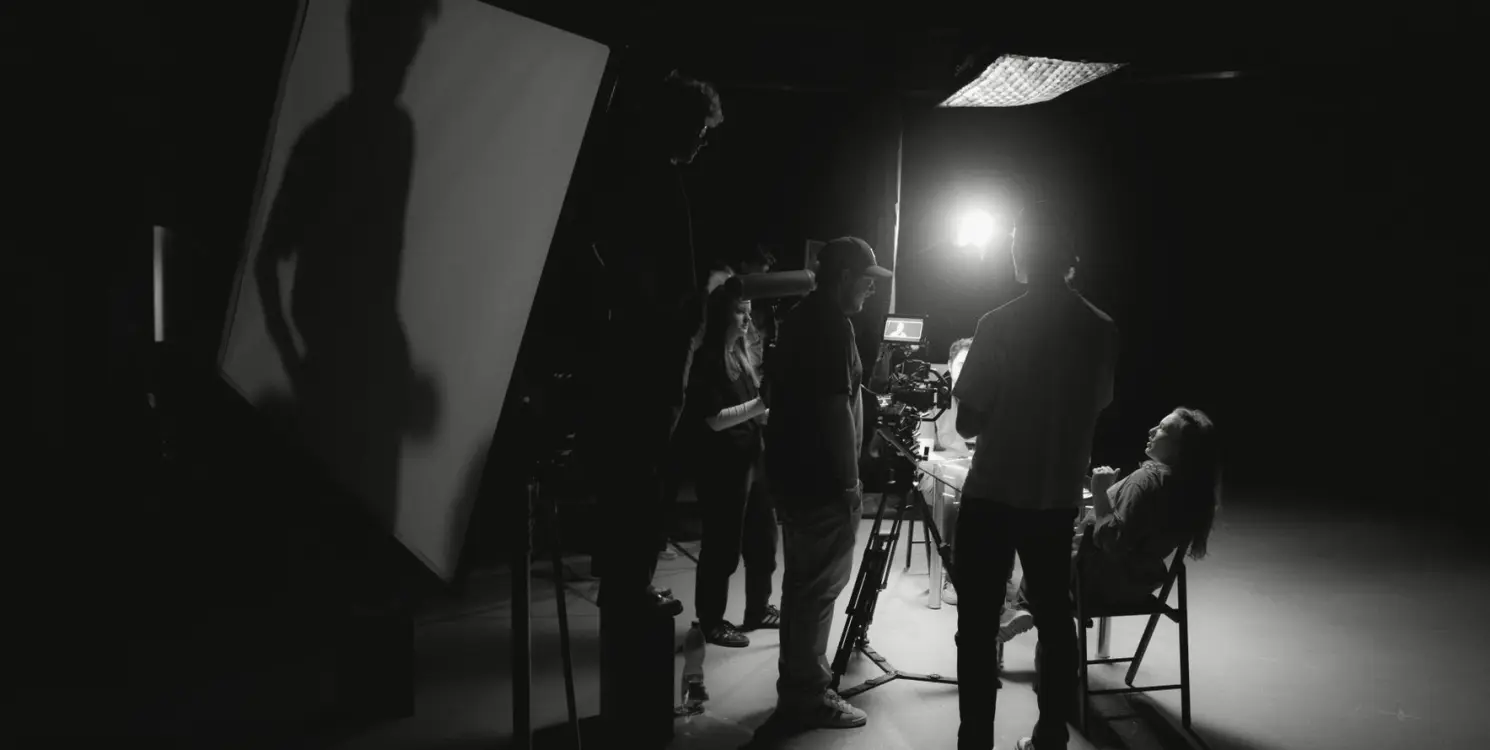
Before You Commit: A Checklist for Live Production Workflow Support
A practical list of questions to work through before choosing workflow support for a live programme, covering rundowns, rehearsal, roles and what happens when the broadcast overruns.
Start with the programme, not the supplier
Most decisions about workflow support go wrong because the brief describes the studio rather than the programme. Before you speak to anyone, write down what goes on air: the length of the show, how many live inserts it carries, whether guests arrive in the building or by remote link, and how often the running order changes in the final hour. A forty-minute interview programme and a three-hour news block need different support, even if they share a gallery. I work on the acoustic side at vogueza, and I see the same pattern from that corner of the room. When the programme is described clearly, everything downstream becomes easier to specify, including who needs to be on the day and what has to be rehearsed.
Put that description on one page and share it with every supplier you approach. If their reply does not refer back to it, treat that as information. Good support starts from your running order and your risks, then works outward to people, hours and equipment. The checklist below follows that order, so you can tick items off as you hear each answer rather than relying on a general impression of competence.
- Length and frequency of the programme
- Number of live inserts and remote guests
- How late the running order tends to change
Rundown planning: what you should be shown
Ask to see how a rundown is built, not just that one will be provided. A usable rundown carries timings that add up, a clear owner for every item, and a note of what each segment needs from camera, sound, lighting and graphics. It should also show where the programme can flex, because live television rarely finishes exactly where the plan says it will. Check that the rundown is written for the whole team, not only the director. Presenters need to see their cues in plain language. Sound needs to know which microphones are live and when. If the document only makes sense to the person who wrote it, it will fail the first time someone else has to act on it under pressure.
Ask also how changes are handled once the programme is on air. Someone must be responsible for updating the running order, and everyone must know where the current version lives. A supplier who can describe that process calmly, step by step, has usually done it many times. One who talks only in general terms about flexibility has probably relied on goodwill rather than method.
- Timings that add up, with a stated margin for overrun
- A named owner for every item
- Needs of each department noted per segment
Rehearsal: how much, and with whom
Rehearsal is where workflow support earns its place, and it is the item most often cut when budgets tighten. Ask how many run-throughs are planned, whether they use the real presenters and guests, and whether they happen in the actual studio with the actual equipment switched on. A walk-through of the script in a meeting room is useful, but it does not reveal a talkback problem or a monitor that cannot be read from the desk. From the sound side, I would add one request: rehearse the awkward moments deliberately. A guest who speaks quietly, a presenter who moves away from the microphone, an insert that arrives louder than the studio. Finding those in rehearsal costs minutes. Finding them on air costs the segment.
Agree in advance what a successful rehearsal looks like. It might be a clean run to time, a list of faults logged and fixed, and a short note on what changed in the rundown as a result. Without that, rehearsal tends to become a comfortable run-through that confirms what everyone already believed, and the real weaknesses stay hidden until the broadcast itself.
- Number of rehearsals and where they take place
- Real presenters, guests and equipment involved
- A written record of faults found and fixed
On the day: roles, cover and communication
Establish exactly who will be present during the broadcast and what each person is responsible for. Technical support on the day should have a defined role, a place in the gallery or the studio, and a direct line to the director. Ask who makes the call if two problems arrive at once, and who decides when to drop an item to protect the programme's end time. Ask about cover as well. If a key person falls ill the night before, what happens? A supplier with a small, experienced crew should be able to answer honestly, including where the limits are. Honest limits are more useful to you than a promise that nothing can go wrong.
Check the communication setup itself. Intercom channels should be agreed and tested before the programme, with a clear rule about who may speak on which channel while the show is live. Decide how the floor team, the gallery and the presenters will signal a problem without disturbing the broadcast. These are small arrangements, but they are what holds a live programme together during a difficult minute, and they should be written down.
- Named roles and a clear chain of decision
- Plan for absence of a key crew member
- Intercom channels tested and agreed beforehand
Scope, handover and what happens afterwards
Be clear about what is included and what is not. Does support cover only the broadcast, or also the planning meetings and rehearsals that lead up to it? Are changes to the rundown after a certain point treated as part of the work or as an extra? Ask for these answers in writing, as part of a quotation, so that both sides share the same understanding before the first meeting. Think about handover too. If your own team is meant to run the programme unaided in a few months, the support should leave something behind: a documented rundown template, a checklist for the gallery, notes on the settings that worked. Support that leaves no trace has to be bought again from scratch each time.
Finally, ask how the work is reviewed. A short debrief after the first few broadcasts, covering timings, faults and what the team would change, is a sensible habit and costs little. It turns each programme into evidence for the next one. If a supplier has no appetite for that conversation, consider whether they are interested in the programme running well or simply in having been present.
- What is included, in a written quotation
- Documents left with your team
- A debrief after early broadcasts
Putting the checklist to use
Take the points above into every conversation and note the answers side by side. You will probably find that the differences between suppliers lie less in equipment than in how they describe rehearsal, cover and change. Those descriptions tell you how they behave when the programme stops going to plan, which is when support is actually needed.
If an answer is vague, ask a second, more specific question. If it is still vague, record that and move on. A decision made against a written list is easier to explain to colleagues and easier to revisit later, and it keeps attention on the programme you intend to put on air rather than on the pitch.
Choosing workflow support is a decision about how a programme will behave under pressure, so judge it by the plain answers you receive: a rundown that others can follow, rehearsal in the real room, named roles on the day, and a written scope. Work through the list with each supplier and keep your notes. If you would like to talk through your own programme, the contact page is the place to start.
Keep reading

A Quiet Room for Loud Mornings: One Studio's Sound Fix
Marcus ran a regional breakfast show from a converted office whose echo swallowed every guest. This is how measuring the room, treating it and moving two microphones changed what viewers heard.
Six Room Mistakes That Spoil Speech on Air, and How to Avoid Them
Most muddy dialogue in a live studio traces back to a handful of avoidable choices made before the first rehearsal. Here is what goes wrong with room acoustics and how to put it right.
Priya Sandhu
Acoustics SpecialistPriya measures and treats rooms so presenters and guests are heard clearly on air.
Get in touch
Email: hello@vogueza.org