
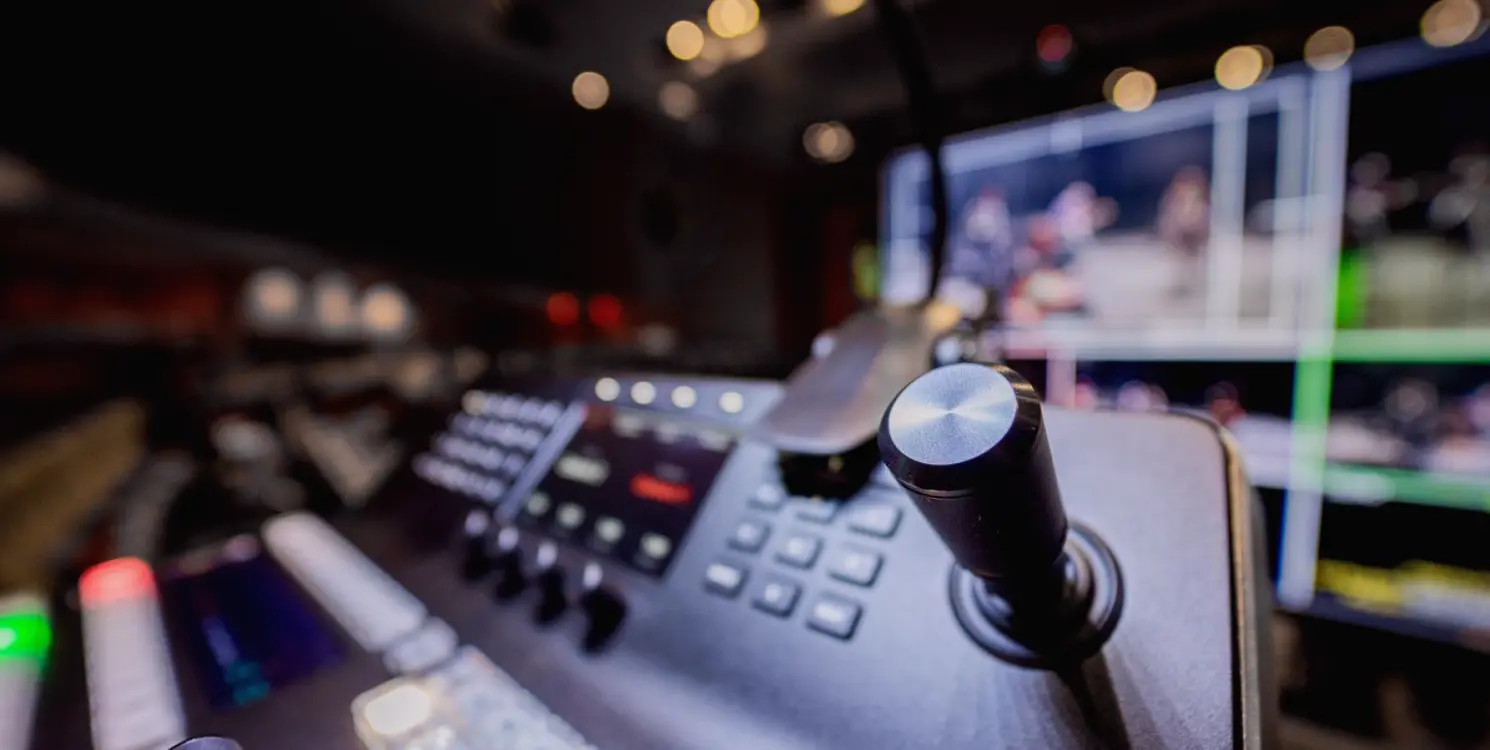
Camera crews and shot planning now available for live bulletins and panels
Our camera operation and direction service gives news bulletins, interviews and multi-camera live shows an experienced crew and a shot plan agreed before the first rehearsal.
What the service covers
Camera Operation and Direction is the part of our work that puts people and plans on the studio floor. A crew of experienced operators is supplied for news bulletins, one-to-one interviews and multi-camera live shows, together with a director who plans the shots those cameras will take. The two are offered together because a plan is only useful if the people carrying it out have seen it, questioned it and rehearsed it.
Daniel Pryce, our Lead Camera Director, leads this work. He plans shots and directs crews for interviews and live panel shows, and he is the person your producer speaks to when the booking is confirmed. I work alongside him on the acoustic side, so I see how the plan meets the room as well as the cameras.
The service sits beside our other offers rather than replacing them. A station that already has a gallery and a lighting rig can book crews alone, and a team building a new studio can add direction to the equipment integration and lighting work.
How a shot plan is built
Every engagement starts with a conversation about the programme itself: who presents, how many guests sit at the desk, how long the running order is and what the audience expects to see. From that we draw up a shot plan that names each camera position, its lens and its main job, such as a wide of the set, a close single on the presenter or a cutaway to the guest.
The plan is shared with your producer before anyone arrives. Changes are easier on paper than during a rehearsal, so we ask for comments early and keep a revised copy that the whole crew works from. The aim is that each operator knows what the director will ask for before the director asks it.
Where a set already exists, we walk it first and note sightlines, floor marks and any obstruction. Where it is still being designed, we offer views on desk placement so the cameras are not forced into awkward angles later.
- Camera positions, lenses and roles written down
- Guest and presenter seating checked against sightlines
- One revised plan issued to the whole crew
Crews for different kinds of programme
A short news bulletin and a long panel show ask different things of a crew. A bulletin is tight and repeatable: the framing barely changes and the discipline lies in holding a steady shot and moving cleanly when the director calls the next one. Our operators rehearse the handovers until they are routine.
Interviews and panels are less predictable. Guests lean in, interrupt one another and move in their seats, so the crew must watch the whole set while keeping their own frame in order. For multi-camera shows we agree a clear way of calling shots and a talkback routine so that nobody guesses.
The number of operators is set by the programme, not by a standard package. A two-camera interview may need two people and a director, while a larger panel needs more. We would rather recommend the smaller crew that does the job than add heads for the sake of it.
Rehearsal and the day itself
Rehearsal is where most of the value is found. We ask for time on the set with the real presenters, or stand-ins if they are unavailable, to run the opening, a typical interview and the close. Operators learn where the presenter naturally looks, and the director learns where the plan needs adjusting.
On the day, the crew arrives ahead of the call time to check cameras, focus, tally and talkback before guests are seated. The director stays in contact with the gallery throughout, and any change to the running order is passed to the floor at once.
Afterwards we are glad to talk through what went well and what could be tightened, so the next programme starts from a better position than the last one.
- Crew on site ahead of the call time
- Camera, focus, tally and talkback checked first
- Running-order changes passed to the floor straight away
What to prepare before you book
A short brief makes planning quicker. Tell us the programme format, the usual number of presenters and guests, the length of each transmission and how often you go on air. A floor plan of the studio, even a rough sketch, helps us place cameras before we visit.
It is also useful to know which equipment is already on site, including cameras, tripods, prompters and the intercom system. If gear needs to be supplied or checked, we say so in the written quotation so there are no surprises.
If you are still deciding between formats, bring the question to us. We can describe how a single-camera interview differs from a three-camera set in practice, and what each asks of the room, the crew and the budget.
- Programme format, guest numbers and running time
- A rough floor plan of the studio
- A list of the cameras and support gear already on site
Arranging the work
Enquiries come through the contact page. We reply with questions about the programme, then send a written quotation that sets out the crew, the days and what is included. When you confirm it in writing, we issue an invoice, payable by bank transfer, and agree the dates.
The Prices page lists what camera operation and direction costs and what changes the figure, so you can judge the scale of the work before you write to us.
If your plans shift, tell us as early as you can. Cancellations and refunds follow the payment and refund policy, which we are happy to explain in plain terms.
Good camera work rarely draws attention to itself: the presenter is framed well, the guest is shown at the right moment and the programme keeps to time. That outcome comes from a plan made early, a crew that has rehearsed it and a director who stays alert on the day. If you are putting together a bulletin, an interview series or a live panel, write to us through the contact page and describe what you have in mind.
Keep reading
Six Gallery Integration Mistakes and How to Avoid Them
Most live gallery faults trace back to decisions made before the first cable is pulled. Here are the integration mistakes we meet most often, and the checks that prevent them.
Camera Crews and Shot Plans for the Darker Months
As the evenings draw in, studio schedules fill up. Priya Sandhu sets out how to plan camera positions, crew rotas and shot lists so autumn and winter broadcasts stay steady.
Priya Sandhu
Acoustics SpecialistPriya measures and treats rooms so presenters and guests are heard clearly on air.
Get in touch
Email: hello@vogueza.org